
Fishery Improvement Project
Last Update: August 2026
Species:
- Pacific white shrimp (Litopenaeus occidentalis and Litopenaeus stylirostris(
- Red shrimp (Farfantepenaeus brevirostris)
Gear Type: Bottom trawl
FIP Profile at FisheryProgress.org: PROSPECTIVE Panama Gulfs of Panama and Chiriquí shrimp – bottom trawl
Fishery location: Pacific waters of Panama, mainly in the Gulf of Panama and the Gulf of Chiriquí.
FIP coordination: CeDePesca. If you would like more information about the FIP or if you wish to support it, please contact Ernesto Godelman (CeDePesca).
FIP Partners:
Quick view
| Categories: | Shrimp, Lobster and Crab |
| Last Update: |
August 2026
|
| Species: | Pacific white shrimp (Litopenaeus occidentalis and Litopenaeus stylirostris), Red shrimp (Farfantepenaeus brevirostris) |
| Fishery Location: | Pacific waters of Panama, mainly in the Gulf of Panama and the Gulf of Chiriquí |
FIP Description
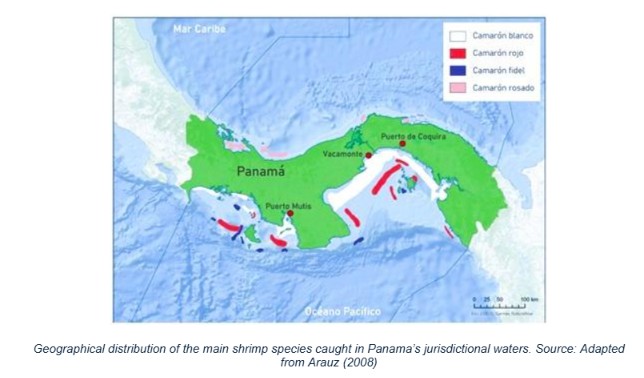
APECAM have partnered with CeDePesca to develop a Fishery Improvement Project (FIP) for Panama’s trawl shrimp fishery. The industrial trawl shrimp fishery operates in Panama’s Pacific waters, mainly in the Gulf of Panama and the Gulf of Chiriquí. The industrial fleet uses bottom trawl nets to catch commercially important shrimp species. This fishery has a long history in the country, with industrial fishing activities dating back to the 1950s.
The main target species included in the project are Pacific white shrimp (Litopenaeus occidentalis and Litopenaeus stylirostris) and red shrimp (Farfantepenaeus brevirostris). As part of the development phase, CeDePesca will conduct a pre-assessment of the fishery against the Marine Stewardship Council (MSC) Standard to identify the main challenges to achieving sustainability. Based on the results, a FIP Action Plan will be developed to improve the fishery’s performance and advance toward a certifiable status against the MSC Standard.
In 2024, landings from Panama’s trawl fleet included 514 metric tons of white shrimp (Litopenaeus spp.) and 465 metric tons of red shrimp (Farfantepenaeus brevirostris), for a total of 979 metric tons of the main target species groups included in the FIP.
