
Fishery Improvement Project
Last update: July 2025
Species: Argentina Hake (Merluccius hubbsi)
FIP Stage according to CASS: 4, Improvements in Fisheries Practices or Management.
FIP Rating according to MSC benchmarking tool: (Pre-evaluation ongoing)
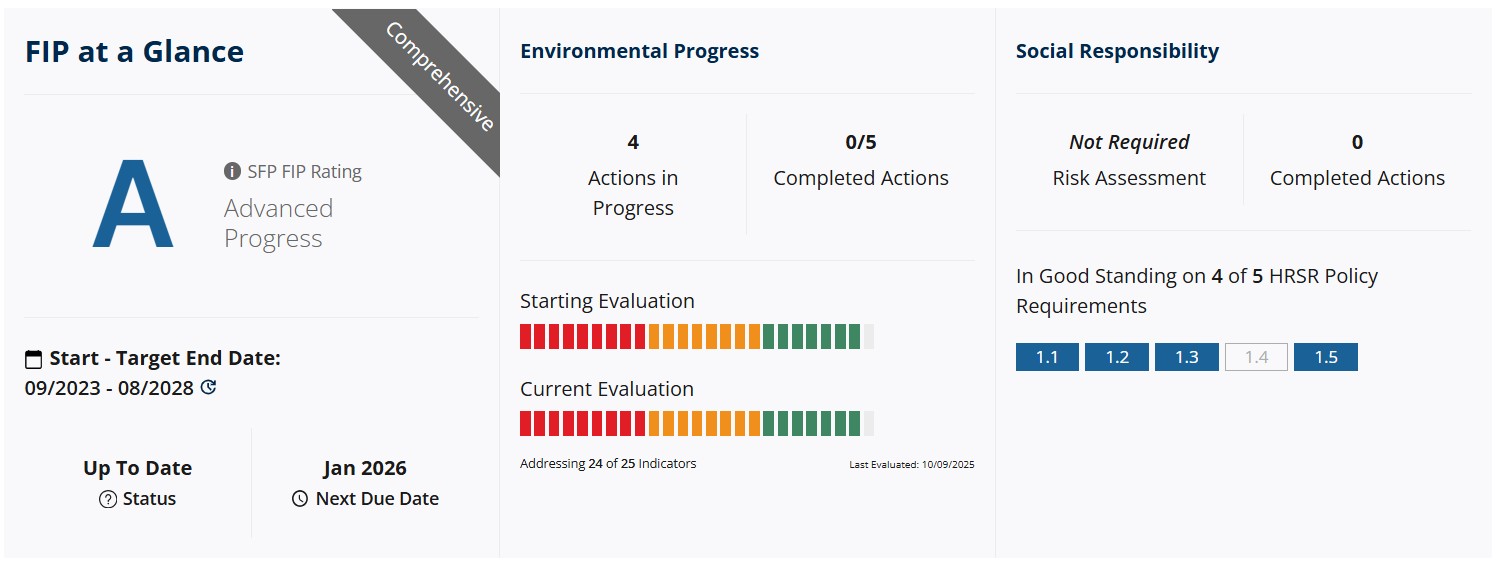
FIP Rating according to SFP rating system: A (Advanced progress, December 2025)
FIP profile at FisheryProgress.org: Argentina hake – bottom trawl (chilling fleet) December 2025
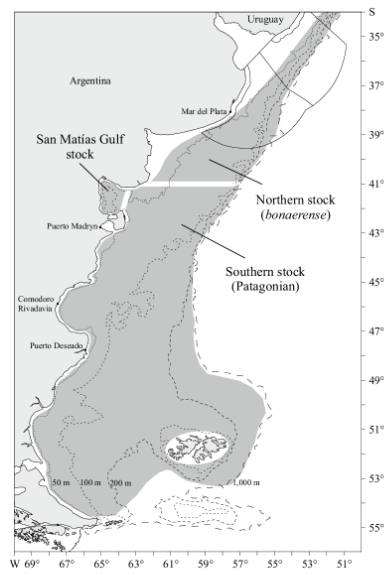
Fishery Location: FAO Area 41. Argentine Exclusive Economic Zone.
FIP Coordination: If you would like more information about the FIP or if you wish to support it, please contact Ángel Diaz (CeDePesca).
FIP Participants:
- Alleloccic
- Antonio Baldino E Hijos
- B/P Feixa
- Caletas Oli Pau
- Cámara Argentina de Armadores de Buques Pesqueros de Altura (CAAPBA)
- Cayo Largo
- Chernia
- Crestas
- De Angelis y Logghe
- El Marisco
- Fishing Ground Mdq
- Lineaerre
- Lucrimar
- Marea Óptima
- Marveraz
- Nuevo Viento
- Pelagic
- Pesca Angela
- Urbipez
- Vicarp
- CeDePesca (technical support)
Other references: INIDEP – merluza común (In Spanish)
Date Publicly Announced: October 2022 (Prospective FIP announced)
Date Active FIP Launched: September 01, 2023 (Comprehensive FIP Action Plan adopted)
Supporting Documents
FIP Framework Agreement
FIP Specific Agreement N2
Initial Improvement Recommendations
- [COMPLETE] Complete an MSC Pre-Assessment of the fishery to determine its current level of compliance against the standard and to identify sustainability issues.
- [COMPLETE] Adopt a FIP Action Plan to achieve a certifiable status for the fishery.
Current Improvement Recommendations
- Achieve the establishment of explicit, well-defined harvest control rules.
- Achieve the definition of a limit reference point for the southern stock of Argentine hake and the periodic peer review of the stock assessment.
- Ensure that the fishery obtains explicit management objectives both in relation to the target species and other components of the ecosystem.
- Collect additional data on the interactions of the Argentine hake fishery with other components of the ecosystem through the implementation of a Private On-Board Observer Program.
- Conduct participatory workshops with captains and crew members to identify, analyze and co-design improvements in fishing practices, fishing gear and selectivity devices that reduce the catch of juvenile and ETP/OOS species in the common hake fishery.
- Ensure the improvement of the fishery-specific management system, including the periodic evaluation of its performance.
- Promote the bilateral cooperation between Argentina and Spain within the framework of the existing Memorandum of Understanding for the Sustainable Management of the Argentine hake fishery in the area adjacent to the Argentine EEZ.
Quick view
| Categories: | Whitefish |
| Last Update: | July 2024 |
| Species: | Argentina Hake (Merluccius hubbsi) |
| FIP Rating according to CASS: | 2, the FIP is being launched. |
| FIP Rating according to SFP rating system: | A (Advanced progress, December 2025) |
| Fishery Location: | Argentine Exclusive Economic Zone, South of 41° S. |
Background
The FIP aims to achieve a certifiable status for the fishery against the MSC standard in the shortest timeframe possible.
Argentine hake (Merluccius hubbsi) is a demersal-pelagic species that inhabits cold waters related to sub-antarctic currents. It is one of the leading fishing resources in the Argentine Sea. The Southern stock of the species is distributed between 41°S and 48°S. The industrial fishery is comprised of two main fleets: the freezing fleet and the chilling fleet. Both fleets use bottom trawls as fishing gear. The fishery is managed by the Fisheries Federal Council (Consejo Federal Pesquero) and the National Secretariat for Agriculture, Livestock and Fisheries (Secretaría de Agricultura, Ganadería y Pesca de la Nación), while research and stock assessments are undertaken by the National Institute of Fisheries Research and Development (Instituto Nacional de Investigación y Desarrollo Pesquero).
Progress Update
2024
January 2024 – June 2024
CeDePesca documented the audit published by the National Audit Office in November 2023 on the management of the Undersecretariat of Fisheries and Aquaculture, INIDEP, and the Argentine Naval Prefecture in relation to the hake fishery during the period 2018–2022.
On March 22th, 2024, a virtual meeting was held with researchers from the Argentine Hake Research Program, who reported that the latest report incorporated the PBROBV30%.
On March 4th, 2024, CeDePesca requested the history of sanctions from the Directorate of Fisheries Control and Inspection; following the resignation of the Director in April 2024, no response has been received to date.
July 2024 – December 2024
In July 2024, CeDePesca presented FIP members with a first draft of the fishery management plan, which includes sustainability objectives, current regulations, catch control rules, ecosystem aspects, general monitoring, and management provisions.
On July 8th, eight students and technicians who will be part of the onboard observer team received training focused on data recording according to the MSC standard. An update to the data collection format was also presented, incorporating the identification of critical moments during fishing maneuvers and their relationship with interactions with ETP species.
On December 6th, 2024, CeDePesca submitted a new request for information on the history of sanctions and is awaiting a response.
On December 16th, 2024, companies belonging to the Chamber of Shipowners were informed about the progress of the PROME for fresh hake, and a proposal was presented to optimize the management of the fishery through regulatory harmonization, an ecosystem approach, and the strengthening of bilateral agreements, as well as the importance of having observers on board.
January 2025 – June 2025
According to the latest stock assessment in November 2024, the Biological Operating Reference Point (BORP) was estimated, setting the Reproductive Biomass at 30% of the Virgin Reproductive Biomass (810,000 t), clarifying that further research is required to reduce the uncertainty associated with the PBRO.
On January 29th, data from the Private Observers on Board Program (POAB), coordinated by CeDePesca, were reported for the first time. Between August and November 2024, six trips and 102 sets were monitored.
On February 21st, 2025, a virtual meeting was held between INIDEP and CeDePesca, at which it was indicated that the estimate of the Biological Reference Point Limit would probably be completed during the current year.
In April 2025, the Chamber of Deep-Sea Fishing Vessel Owners (CAABPA) submitted a proposal to the Federal Fisheries Council for a management and administration plan for the Argentine hake fishery.
July 2025 – December 2025
On July 11th, 2025, CeDePesca submitted a new request for information on the history of sanctions; it is awaiting a response.
On July 28th, CeDePesca submitted the first preliminary report of the Private Onboard Observer Program (POAB). The report compiles information gathered during 10 trips and 171 fishing sets carried out between August 2024 and April 2025.
On the social side, CeDePesca and its FIP partners met the requirements of the new FisheryProgress policy by completing the Human Rights and Social Responsibility Policy Statement, as well as submitting updates to the risk self-assessment criteria, reporting mechanisms, and list of vessels associated with PROME.
